June Fish of the Month: Tripletail Lobotes surinamensis
Published: June 25, 2026
June Fish of the Month: Tripletail Lobotes surinamensis
Dr. Geoffrey Smith
NWFSC Biology Instructor
We’re now moving into the peak of summer, and a common event that happens this time of year is pelagic (open water) sargassum algae gets diverted into nearshore/coastal waters by a combination of winds and currents. Tourists often find it unfavorable when it washes onshore, especially once it starts decaying. In addition, in some parts of the Caribbean, changes in climate and currents have resulted in huge amounts of it washing into coastal waters causing low oxygen and smothering issues for certain habitats. However, sargassum is also a critical habitat for a wide range or organisms including juvenile sea turtles, shrimp and crabs specially adapted to live in sargassum, juvenile sportfish such as mahi mahi and amberjack among numerous others. Last summer we highlighted the Sargassum Fish, and this month we’ll be highlighting another common sargassum resident, the Tripletail.
The Tripletail has a relatively large rounded caudal (tail) fin. The also have relatively large, rounded posterior edges of the dorsal and anal fin that reach into the caudal fin area, resembling two additional tails, hence the common name Tripletail (Fig. 1). The genus name Lobotes is Latin for “lobe” referring to the rounded, lobe-like appearance of the dorsal, anal, and caudal fins. The species name surinamensis is a Latin term meaning “from Suriname” referencing the location where it was formally described by a naturalist. There is evidence that Lobotes is a monotypic, one species, genus, with the Tripletail being the only living species. Other evidence suggests that there may be two separate species. If we go with the two species scenario, the Tripletail is found all throughout the tropical and subtropical waters of the Atlantic (Fig, 2) and the Pacific Tripletail Lobotes pacifica is found in tropical and subtropical waters of the Pacific and Indian Oceans.
As far as coloration, adult Tripletail are typically tan, green, brown, or nearly black while juveniles may be some shade of brown, but are often bright orange or yellow to blend in with floating sargassum where they are often found (Fig. 1). In open ocean waters, they are found around sargassum and floating debris. In nearshore waters, they often hide around crab trap buoys, marker buoys and pilings and bridge pilings. This habit has earned them the common name, buoy fish, among many anglers. Ongoing tagging studies are revealing migratory patterns that may include both north/south coastal migrations and inshore/offshore migrations in relation to following warmer waters. Spawning appears to occur primarily in offshore waters from June through August.
Tripletail feed on a wide variety of foods including both fish and crustaceans. And they are highly sought after by anglers not only for their fighting ability, but also are considered excellent table fare. In the state and federal waters offshore of Florida, Tripletail have a minimum size limit of 18 inches total length and a bag limit of 2 per person and they can only be captured by hook and line (no nets or spearing (https://myfwc.com/fishing/saltwater/recreational/tripletail/). So keep your eye out for the numerous interesting denizens of the sargassum, including Tripletail, if you see it floating along the beach or in the bay.
Fig. 1: Typical juvenile Tripletail coloration (top photo from: https://reefs.com/coastal-collecting-log-staying-out-of-trouble/) and three examples of adult Tripletail color patterns ( bottom photos from: https://www.usm.edu/fisheries-research-development/tripletail-tag-release.php – Nick Drinnon).
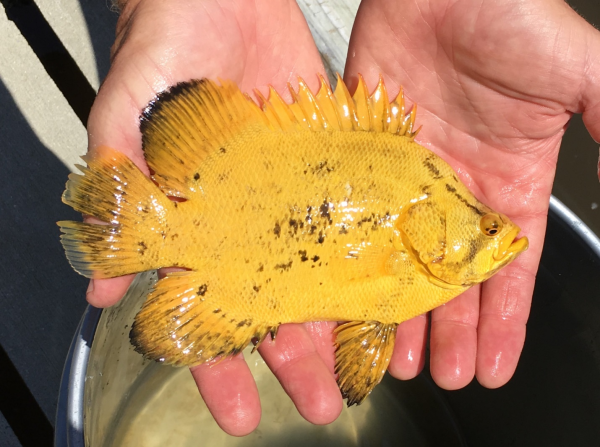
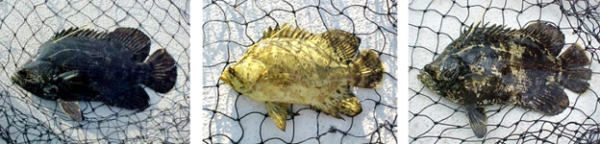
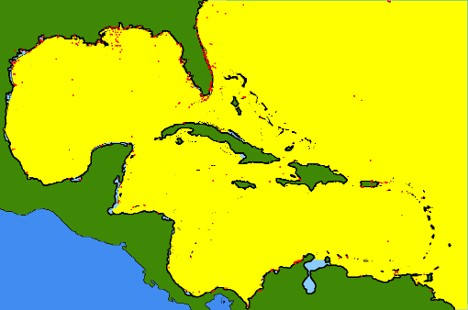
Fig. 2: Tripletail distribution in the south Atlantic and Gulf waters. Image from: https://biogeodb.stri.si.edu/caribbean/.